
 French
  English
  German
  Spanish
  Turkish
  Italian
  Russian
  Arabic
  Persian (Afghanistan)
  Hebrew
  Bengali
  Persian
  Scottish Gaelic
  Panjabi
  Croatian
  Slovenian
  Greek
Greek  Afrikaans
  Korean
  Japanese
  Portuguese
PAS
Parents and buyers worry about hard floors, slips, and unsafe materials. One tumble can ruin playtime. A well-designed kids rubber play mat solves this—adding cushioning, hygiene, and style while meeting safety and sourcing standards.
Featured Snippet
A kids rubber tapis de jeu is a cushioned, non toxique surface that protects children during tummy time, crawling, and active play. Made with EVA or rubber foam, it reduces impact, supports hygiene, and fits modern homes. For B2B buyers, it offers durability, easy cleaning, and customization for private labels and retail programs.
Executive Summary
Safety first: Certified non toxique materials (EVA/rubber) with verified standards reduce risk.
Commercial durability: Dense foam resists compression and daily tumble impacts.
Hygiene & care: Waterproof and easy to clean, some lavable en machine options.
Design flexibility: Interlocking, reversible, puzzle styles; private-label ready.
Cost control: Scalable MOQs, stable yields, and consistent QC from factory supply.
When it doesn’t apply: Not ideal for permanent outdoor UV exposure without additives.
Outline
- What makes a kids rubber tapis de jeusafer than bare sol?
- EVA tapis en moussevs rubber: which fits your market?
- Why non toxiquecertification matters for baby and toddler products?
- How cushioning prevents slips, protects joints, and softens a tumble?
- Temps sur le ventreto crawl: matching mats to development stages
- Lavablevs wipe-clean: hygiene choices that scale in retail
- Interlocking & puzzle playdesigns for flexible salle de jeux layouts
- Materials & finishes: EVA, vegan leather, latex foam—trade-offs explained
- Customization for private labels: colors, patterns, and packaging
- Sourcing checklist: QC, compliance, logistics, and lifecycle value
1) What makes a kids rubber tapis de jeu safer than bare sol?
A purpose-built tapis de jeu adds impact absorption where children land most—knees, wrists, and hips. Unlike a bare sol, a mat uses a foam layer over a stable base to distribute force. In my experience supplying global retailers, a 10–12 mm foam thickness reduces peak impact enough to protect baby’s delicate skin and joints during falls.
Safety also depends on traction. Textured undersides and interlocking edges aide prevent slips, keeping panels aligned during active play. When buyers specify density (kg/m³) and compression set, they get consistent cushioning across shipments—critical for chain-wide rollouts.
2) EVA tapis en mousse vs rubber: which fits your market?
An EVA tapis en mousse is lightweight, resilient, and cost-efficient. Mousse EVA tiles are easy to assemble, color-stable, and ideal for tapis de sol en mousse in homes and stores. Rubber mats offer higher mass and grip, better for high-traffic zones but at higher freight costs.
Comparison table
| Fonctionnalité | Mousse EVA | Caoutchouc |
| Cushion & rebound | Excellent | Very good |
| Weight/shipping | Light | Heavy |
| Custom colors | Broad | Limité |
| Odor control | Low (certified EVA) | Varie |
| Use cases | Playroom, nursery | Gyms, schools |
For most tapis de sol pour enfants, EVA wins on versatility and margin. Rubber fits institutional buyers prioritizing weight and grip.
3) Why non toxique certification matters for baby and toddler products?
Buyers demand proof. A non-toxic baby play claim should be backed by EN71-3, CPSIA, REACH, and phthalate limits. As a manufacturer, we audit raw material lots and keep traceability—this protects brands during compliance checks.
UN non toxic play mat provides peace of mind for parents and reduces returns for sellers. Clear labeling and third-party reports shorten sales cycles with supermarkets and online platforms.
4) How cushioning prevents slips, protects joints, and softens a tumble?
A balanced foam core compresses on impact, then rebounds—key for learning to walk stages. Too soft bottoms out; too hard transmits force. We tune density to keep the floor comfortable while maintaining stability.
Surface coatings matter too. Micro-texture plus a stable base create a safe platform. The result: fewer bruises, confident movement, and longer playtime.
5) Temps sur le ventre to crawl: matching mats to development stages
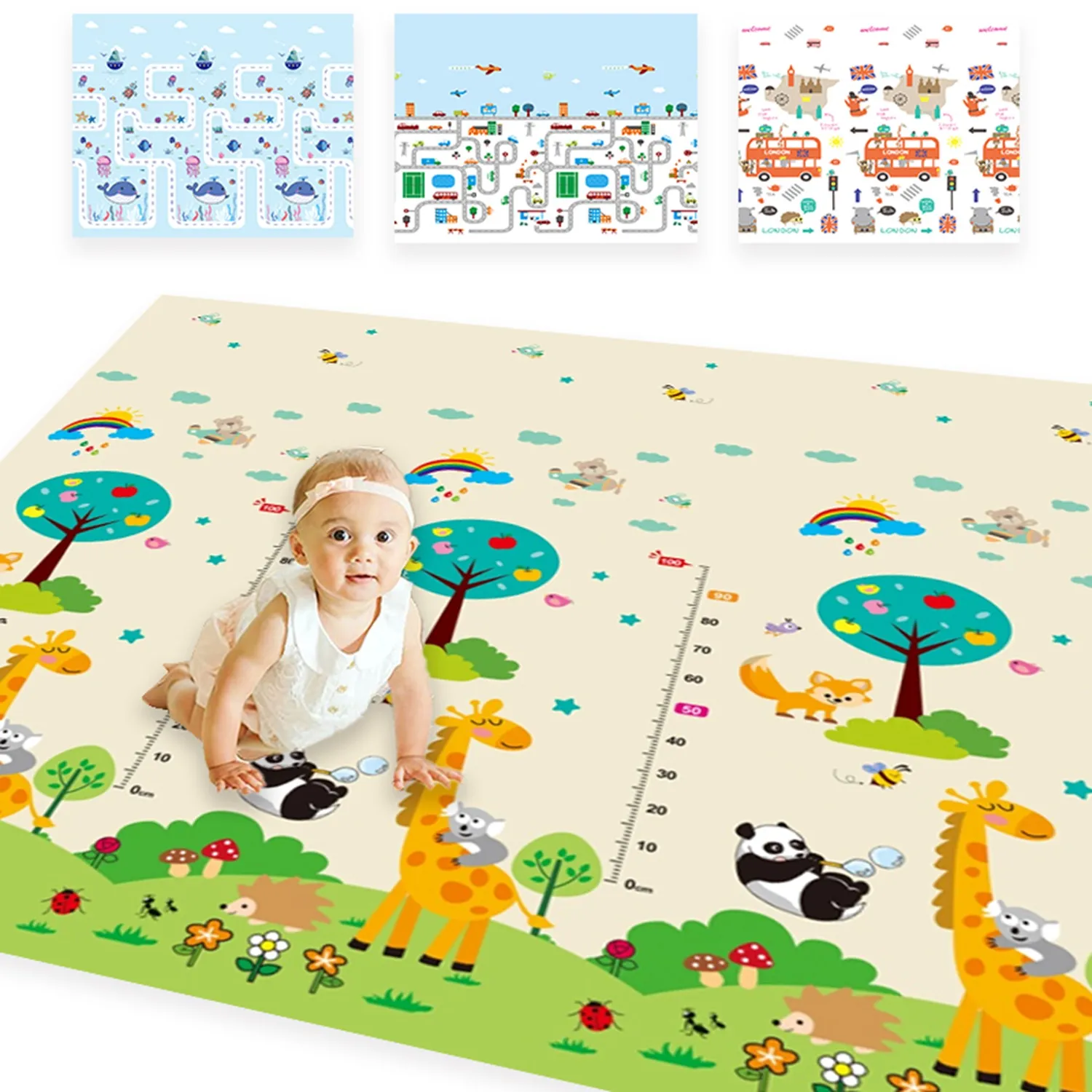
Pour temps sur le ventre, infants need gentle support and warmth. A tapis de jeu pour bébé with smooth seams avoids pressure points. As babies crawl, seams and edges should stay flush—mousse imbriquée prevents lift.
Toddlers benefit from thicker tiles that absorb running steps and tumble falls. A mat for toddlers supports confidence during early mobility while keeping caregivers relaxed.
6) Lavable vs wipe-clean: hygiene choices that scale in retail
Retailers juggle returns and cleaning. Wipe-clean EVA tiles handle spills and messes fast—great for daily care. Some premium lines are lavable en machine ou tumble dry (covers only), ideal for hospitality.
Our recommendation: offer two SKUs—wipe-clean base for volume, lavable covers for premium channels. This balances margins and shopper expectations.
7) Interlocking & puzzle play designs for flexible salle de jeux layouts
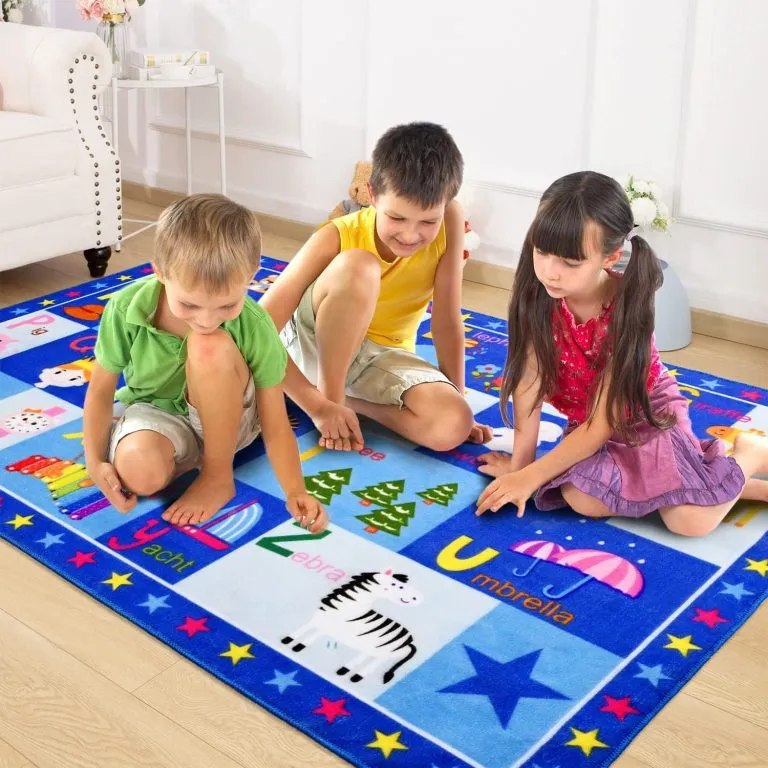
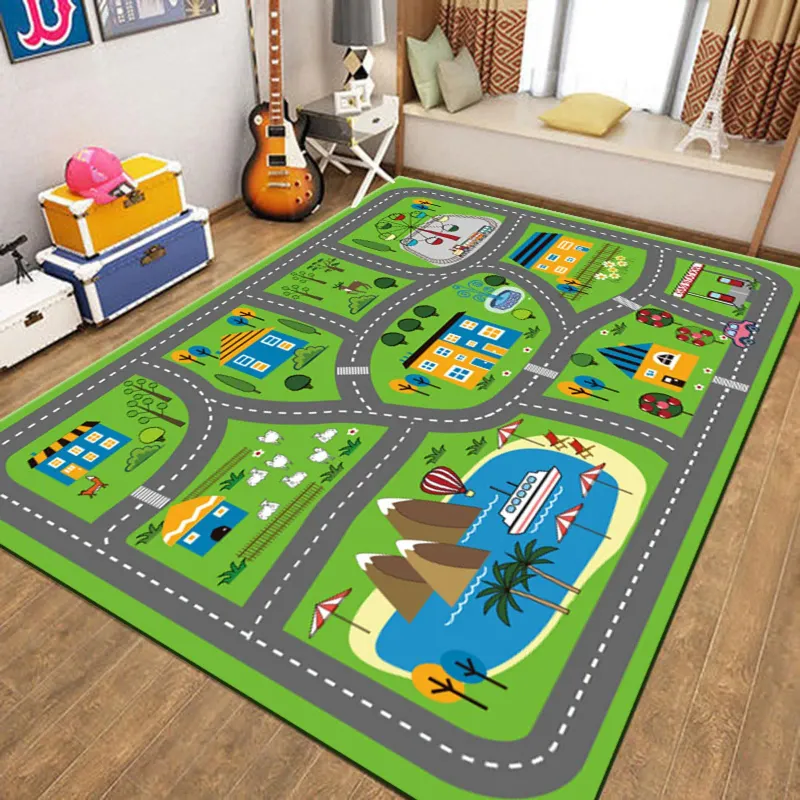
Tapis de jeu puzzle let families build custom shapes. Dalles en mousse avec interlocking edges assemble quickly and stay aligned. Educational prints—alphabet and numbers puzzle—add value without extra components.
Reversible, two-sided prints extend style life. For apartments, folding foam designs store easily after playtime.
8) Materials & finishes: EVA, vegan leather, latex foam—trade-offs explained
EVA: light, resilient, facile à nettoyer, broad colors.
Vegan leather tops: premium look, wipe-clean, ideal for design-led brands.
Latex foam: elastic feel, higher cost, limited supply.
Polyurethane coatings: durability and stain resistance.
Finish choices—wood grain, matte, or bright colors and patterns—should match channel expectations. Always verify a safe material declaration.
9) Customization for private labels: colors, patterns, and packaging
Private labels win with differentiation. We support Pantone matching, embossing, and conception unique prints. Packaging can shift from flat cartons to retail-ready sleeves for shop for kids aisles.
MOQ planning matters. Start with core sizes, then expand SKUs after sell-through data validates demand—this protects cash flow.
10) Sourcing checklist: QC, compliance, logistics, and lifecycle value
Checklist
Incoming material COAs & lot tracking
Density & compression tests per batch
Compliance files (EN71-3, CPSIA, REACH)
Drop tests and slip resistance
Container loading plans & lead times
When buyers align specs with use cases, the mat is perfect for both safety and sell-through—true great value over its lifecycle.
FAQ
Is EVA safe for babies?
Yes, certified Ève grades meeting EN71-3 and CPSIA are widely used and safe and healthy.
How thick should a toddler mat be?
Typically 10–12 mm for balance—enough coussin without instability.
Can I use a mat outdoors?
Short sessions are fine; prolonged UV needs additives or rubber alternatives.
Are interlocking mats easy to assemble?
Yes—easy to assemble tiles snap together and stay flat.
What cleaning method is best for retailers?
Wipe-clean EVA for volume; lavable en machine covers for premium.
Principaux points à retenir
Une qualité play mat provides a safe surface for babies and toddlers.
Certified non toxique materials reduce risk and returns.
EVA delivers the best balance of cost, comfort, and customization.
Interlocking designs adapt to any salle de jeux.
Smart SKU planning boosts margins across channels.
Next Step (soft CTA):
If you’re evaluating a new line or upgrading specs, request a materials review and sample drop test. I’m happy to share our density data, compliance files, and packaging options to help you decide—thoughtfully, and with long-term value in mind.