
 Italian
  English
  German
  French
  Spanish
  Turkish
  Russian
  Arabic
  Persian (Afghanistan)
  Hebrew
  Bengali
  Persian
  Scottish Gaelic
  Panjabi
  Croatian
  Slovenian
  Greek
Greek  Afrikaans
  Korean
  Japanese
  Portuguese
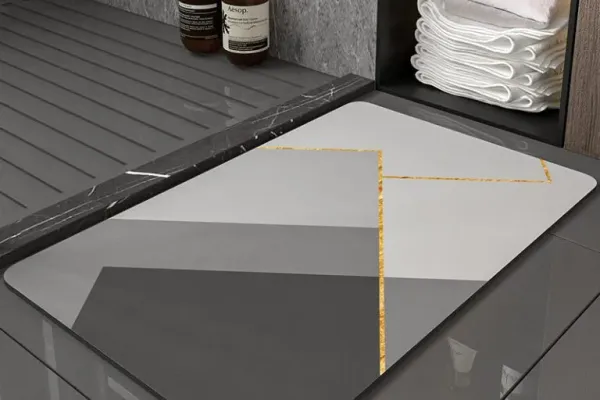
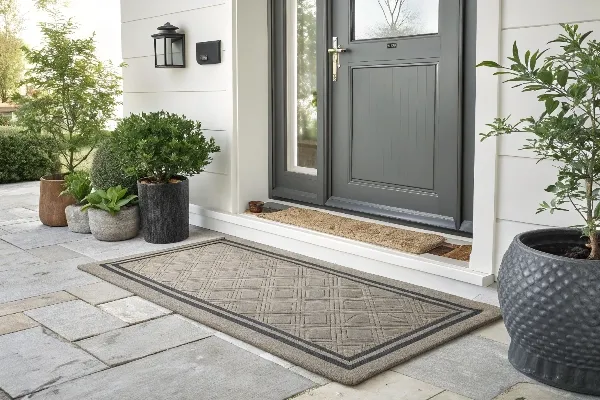

Choosing a rug sounds easy—until it arrives and looks “almost right.” That “almost” hurts: furniture floats, corners curl, and returns get expensive. The solution is simple and repeatable: measure the room table and traffic path, choose a layout rule, then order custom rug sizes that match exact specifications.
Custom rug sizes are worth it when standard rug sizes don’t match your layout, furniture footprint, or walkways. The best approach is to measure the seating/room table zone, keep consistent space around edges (often 6–12 inches), and select a custom sized rug (or custom cut rugs) that delivers a flawless fit. For B2B buyers, this reduces returns, improves customer satisfaction, and supports private label programs.

Executive Summary (for B2B decision-makers)
Room-first sizing beats product-first sizing: measure the usable floor area, then pick the rug size that anchors furniture with consistent margins—this lowers “wrong size” returns in e-commerce.
Custom sized formats unlock higher conversion: odd room shapes, open floor plans, and hospitality corridors often need non-standard dimensions; offering custom size rugs increases basket size and reduces substitution.
Performance trade-offs are predictable: fibra naturale opzioni come sisal E seagrass look premium but may feel rough and can react differently to moisture; synthetics like polipropilene tend to be more budget-friendly and high-traffic friendly.
Compliance matters in global retail: if you supply the EU, be prepared for REACH SVHC communication duties under Article 33; for U.S. retail, understand flammability expectations and state warning regimes. (See sources below.)
Rug pad standards reduce complaints: pairing the right tappeto sottotappeto (thickness + grip) improves safety, comfort, and perceived quality—especially in living rooms and hospitality.
A clear spec sheet wins orders: buyers move faster when you provide a one-page template covering size, binding, backing, tolerance, color (beige/light grey/taupe), and packaging.
Outline
- Why do custom rug sizes matter more than ever for B2B buyers?
- What are the key rug size rules for living rooms and open floor plans?
- How do you measure a room table zone to fit your space correctly?
- Standard rug sizes vs custom size rugs: when does custom win?
- Which rug fibers and materials match style and needs (sisal, wool, polypropylene)?
- Do you need to add a rug pad—and how do you choose the perfect fit custom rug pad?
- What about shaped rugs and custom-sized rug options for odd layouts?
- Patio and every room: what changes for outdoor and high-traffic placements?
- How do color and pattern (beige, crosshatch, plaid) affect perceived size and décor?
- B2B ordering checklist: exact specifications, tolerances, packaging, and compliance
Why do custom rug sizes matter more than ever for B2B buyers?
In my day-to-day work with importers, retail chains, and private label teams, I see the same root issue: shoppers don’t buy a rug by “dimensions.” They buy it to anchor the space, add warmth, and make their home look finished. If the right rug is off by even a little, the whole space feel changes.
For B2B sellers, sizing errors are not a small problem. They lead to higher return rates, negative reviews (“too small,” “doesn’t fit”), and discounting. This is why customizable rugs and made to order programs are growing: a custom sized option helps customers fit your unique space without forcing them into a standard rug that looks wrong.
As a custom mats Manufacturing plants for products, we treat size as a product feature, not a detail. When a buyer can confidently choose from a variety of sizes—including a custom-size rug—conversion improves, and the post-purchase complaints drop.
What are the key rug size rules for living rooms and open floor plans?
Let’s make this easy. In living rooms, the rug usually does one job: it defines the seating area. The most common failures happen when the rug sits “in the middle” and furniture legs don’t connect to it, making the room feel smaller.
Three practical sizing layouts (the ones buyers actually use)
All legs on: sofa and chairs fully on the area rug.
Best for premium looks, larger rooms, and higher price points.
Front legs on: front legs of seating on the rug, back legs off.
This is the most forgiving and works well for many standard rug sizes.
Floating coffee table only: only the table sits on the rug.
This is the most common sizing mistake unless the room is truly tiny.
Per open floor plans, custom rug sizes often outperform standard rug sizes because you’re not just filling a rectangle—you’re visually separating zones (sofa zone, dining zone, reading zone). Here, the “perfect rug” is the one that creates clean borders between zones while keeping comfortable walking lanes.
A simple rule I use: keep space around the rug edges consistent, often 6–12 inches from walls or built-ins (unless a doorway forces tighter spacing). That symmetry creates a flawless fit feeling even when the room is irregular.
How do you measure a room table zone to fit your space correctly?
This is where professional outcomes come from. If you want the right size, measure the furniture footprint, not just the bare floor.
Step-by-step (simple enough for anyone to follow)
Place painter’s tape to outline your sofa + chairs area.
Measure the taped rectangle (length × width).
Add margin for comfort—usually 8–12 inches beyond the front legs area.
Confirm walkways: leave 24–36 inches where people pass frequently.
That’s it. From those numbers, you can order a custom sized rug that matches your exact fit needs.
Here’s a quick comparison table you can share with customers or use in product pages:
| Room scenario | Goal | Recommended approach | Common mistake |
| Small living rooms | Make it feel bigger | Front legs on layout + consistent borders | Buying a tiny rug that only fits the coffee table |
| Large living rooms | Premium, grounded look | All legs on, wider margins | Choosing a standard rug that leaves chairs off |
| Dining with room table | Pull chairs back safely | Add 24″ beyond table edges | Rug too small; chairs catch the edge |
| Entry / hall runner | Safety + durability | Long runner with stable backing | Too narrow; edges curl |
When you supply B2B, this table also becomes a selling tool. It reduces returns because it teaches shoppers to measure before buying.
Standard rug sizes vs custom size rugs: when does custom win?
UN standard rug works when the room matches the catalog assumptions. But many real homes don’t. Think: narrow city apartments, angled walls, built-in benches, or oversized sectional sofas.
Custom wins when:
You need an vestibilità esatta for a special layout.
A retailer wants fewer SKUs but broader coverage via customizable sizing.
Hospitality projects require corridor, lobby, or suite layouts that don’t match standard rug sizes.
A brand wants tailored to fit programs for high-end consumers.
Standard wins when:
The room matches common dimensions.
The buyer needs fast delivery and low MOQ.
The use case is price-sensitive or temporary.
Here’s the trade-off in one sentence: custom size rugs increase satisfaction, but they require clearer specs and tighter production control. That’s where experienced manufacturing matters—binding, tolerance, and finishing need to be repeatable across every rug.
Which rug fibers and materials match style and needs (sisal, wool, polypropylene)?
Material is not just “feel.” It affects longevity, cleaning, and how the rug behaves in high-traffic environments.
Common material choices (and what they’re best at)
Fibra naturale (like sisal E seagrass): crisp, structured look; great in neutral tones and minimalist décor; often chosen for upscale retail.
Wool (for example, batiste woven wool custom rug): soft underfoot, strong premium signal, good for living rooms; requires proper care guidance.
Synthetics (like polipropilene): typically stain-resistant and budget-friendly; popular for family homes and online sales.
And yes—special constructions sell. For example, a micro hooked wool custom rug gives a crafted texture that customers notice immediately. I’ve seen it used as a focal point in premium collections because it looks hand-finished while still fitting scalable production. (If you offer it, be clear about care instructions and lead time.)
If you’re designing a collection, consider a small, controlled palette that can perfectly complement many interiors: beige, light grey, taupe, and a few patterns like crosshatch or a plaid custom rug. This gives buyers confidence while keeping SKU complexity manageable.
Do you need to add a rug pad—and how do you choose the perfect fit custom rug pad?
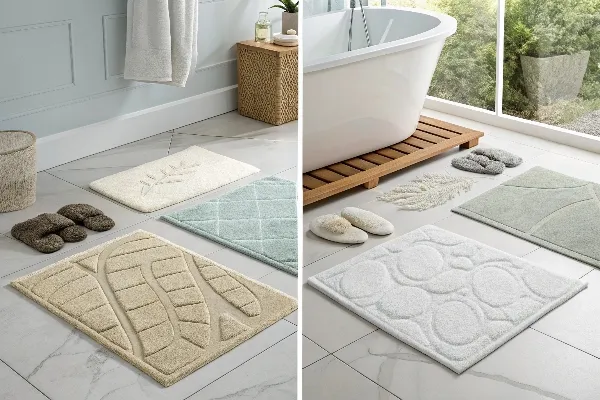
Short answer: in many cases, yes—add a rug pad. It improves comfort, reduces slipping, and can extend life. In professional procurement, safety and user experience matter. A well-matched pad also reduces edge curl complaints.
UN tappeto sottotappeto is not one-size-fits-all. Thickness and grip depend on the floor type and the rug weight. For private label programs, we often recommend bundling a “right pad for this rug” option to reduce confusion.
A simple pad selection checklist
Smooth hard floors → more grip focus
Carpeted floors → less grip, more cushioning
Hospitality / public spaces → stability + durability focus
Thicker isn’t always better (too thick can cause movement)
If you offer a “perfect fit” story, consider a perfect fit custom rug pad cut to match the exact specifications of the rug size. That adds a professional touch and reduces customer guesswork.
What about shaped rugs and custom-sized rug options for odd layouts?
Shoppers increasingly want rugs for corners, bay windows, curved sofas, or branded promotional spaces. This is where shaped rugs and custom-sized formats stand out.
From a manufacturing view, the big decision is finishing:
Binding vs. serging vs. carved edges
Backing choice
Tolerance control (how close you can hold dimensions consistently)
If a buyer wants fit your unique space solutions, your spec workflow must be clean. I recommend a simple approval system:
Digital drawing approval (PDF)
Production tolerance stated upfront
Pre-shipment size check photos
For B2B projects like hotel suites or retail islands, a custom-sized rug often supports brand identity and creates a consistent look across locations. It also reduces on-site trimming, which can look messy.
Patio and every room: what changes for outdoor and high-traffic placements?
“Every room” rugs sell well, but performance expectations change based on location. A patio rug experiences sun, moisture, and dirt. A hallway runner sees constant foot traffic. These are different jobs.
Practical guidance (and when it does not apply)
Outdoor/patio: choose performance constructions; avoid materials that dislike moisture. A willow woven performance custom rug O cheetah woven performance custom rug can fit this category if it’s built for outdoor use.
High-traffic interiors: prioritize durability and easy cleaning; avoid delicate textures in entryways.
Low-traffic areas: you can prioritize softness and luxury.
Assumption: this section assumes typical residential and light commercial use. For heavy commercial installations (airports, large malls), buyers should reference local building codes and performance requirements. Fire and flammability rules can apply for certain public settings.
For U.S. commercial projects, carpet and flooring flammability testing is commonly referenced by standards such as ASTM D2859 (“pill test”) and ASTM E648 (radiant panel). The Carpet and Rug Institute’s technical bulletin provides an overview and mentions these tests.
How do color and pattern (beige, crosshatch, plaid) affect perceived size and décor?
This part surprises many buyers: color changes the “visual size” of a rug. Lighter colors like beige E light grey often make a space feel bigger, while darker or high-contrast patterns can define boundaries more sharply.
If your retailer customers sell online, remember: customers shop with their eyes, and photos drive decisions. A crosshatch pattern can hide small stains and works well in neutral tones. A plaid custom rug can create a cozy, classic feeling—great for seasonal campaigns.
A quick “design-to-size” tip
Small room? Lighter palette, minimal border, fewer high-contrast lines.
Large open floor plans? Use pattern to zone spaces with a rug.
When brands ask me for a collection plan, I often suggest a core palette (beige/taupe/light grey) plus 2–3 statement patterns. That keeps the line coherent while still giving variety.
B2B ordering checklist: exact specifications, tolerances, packaging, and compliance
This is the part that closes deals quietly. The better your ordering process, the easier you are to buy from.
Compliance references (helpful for global B2B buyers)
OEKO-TEX® STANDARD 100 is a widely recognized label for textiles tested for harmful substances. Many home textile buyers use it as a quick signal for product safety expectations.
For EU-market goods, suppliers may face obligations related to SVHC communication in articles under REACH, including providing sufficient information when SVHCs exceed threshold levels.
For California, Proposition 65 is a warning law requiring businesses to inform Californians about significant exposures to listed chemicals. Brands and retailers often ask factories for materials declarations to reduce compliance risk.
I’m not saying every rug needs every label. I am saying: B2B buyers move faster when you can explain the trade-offs and provide documentation.
A short case study: how custom sized programs reduce returns
One e-commerce seller (home goods category) approached us after a quarter of high return costs. Reviews showed the issue wasn’t quality—it was sizing confusion. We did three changes:
Added a simple “measure your room table zone” chart on product pages.
Offered two custom sized options (width and length increments) while keeping the core palette small.
Improved packaging labels so customers could confirm size before opening fully.
Result: fewer “too small” complaints and better ratings. The rugs offer didn’t change; the buying confidence did.
This is where AIDA works in a natural way:
Attention: sizing pain is common
Interest: a simple measuring method feels doable
Desire: fewer returns, happier customers, better margins
Action: request a sizing template and production plan
Domande frequenti
How do I choose the right rug size if my space is between standard rug sizes?
Measure the furniture footprint first, then add consistent margins. If the ideal size lands between standard rug sizes, a custom-size rug often creates the best balance and a cleaner look.
Are custom area rugs worth it for online sellers?
Often yes. Custom area rugs reduce “doesn’t fit” returns when your customer base has varied room layouts. They also let you differentiate your store beyond price competition.
What’s the best rug material for high-traffic homes?
It depends on cleaning needs and budget. Many buyers choose performance synthetics for easy care, while wool and natural fiber options can look premium but may need clearer care instructions.
Do I really need a rug pad?
In many cases, yes. A rug pad improves grip, comfort, and stability. It can also reduce edge curl and slipping complaints.
Are there safety or compliance standards I should know for commercial projects?
Yes. Some U.S. commercial installations reference flammability testing like ASTM D2859 and ASTM E648, and jurisdictions may have building code requirements. Start with project requirements and verify local rules.
What information should I send a factory to get an accurate quote?
Send exact specifications: rug size, shape, material, backing, edge finishing, color/pattern, target use (patio vs indoor), packaging needs, and compliance expectations. The clearer your spec, the faster the quote.
Key takeaways (remember these)
A rug should adatta al tuo spazio by anchoring furniture, not just filling empty floor.
For living rooms, connect furniture legs to the area rug for a stable, premium look.
Custom rug sizes shine in open floor plans, odd layouts, and hospitality corridors.
Material choice is a trade-off: feel, durability, cleaning, and budget all matter.
Add a rug pad when you need better grip, comfort, and fewer complaints.
For B2B, a clear sizing chart + spec sheet reduces returns and speeds decisions.
Compliance readiness (REACH, OEKO-TEX, Prop 65, flammability expectations) helps you sell to serious retail customers.
A soft next step (expertise-led)
If you tell me your top 3 selling room types (e.g., living rooms, dining, hall runner) and your target channel (supermarket, online, hospitality), I’ll draft a one-page custom sized program spec you can send to buyers—complete with recommended size rugs, material options, and packaging notes tailored to fit your market.