
 Korean
  English
  German
  French
  Spanish
  Turkish
  Italian
  Russian
  Arabic
  Persian (Afghanistan)
  Hebrew
  Bengali
  Persian
  Scottish Gaelic
  Panjabi
  Croatian
  Slovenian
  Greek
Greek  Afrikaans
  Japanese
  Portuguese

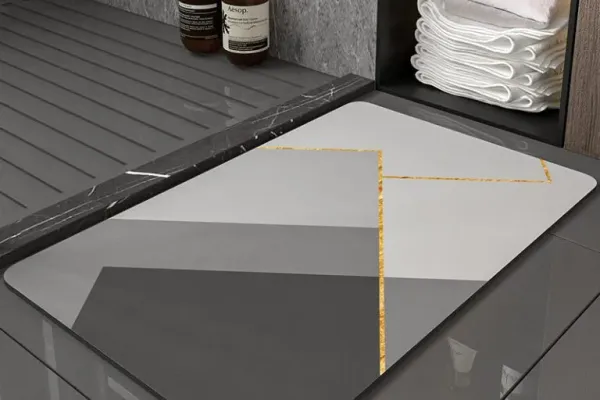

An effective outdoor door mat is the first line of defense for your home’s interior, but choosing the right one is often an afterthought. A poor choice can lead to soaked, dirty floors, potential slip hazards, and the unwelcome growth of mold and mildew. This guide moves beyond simple aesthetics to provide a clear, engineering-based framework for selecting a high-performance waterproof outdoor door mat that is suited to your specific environment, ensuring a clean, safe, and durable entryway.
Why a Truly Waterproof Mat is an Essential Component for Your Entryway
The term “waterproof” in the context of a doormat refers to a material’s ability to resist water absorption and facilitate rapid drying. Unlike mats made from absorbent fibers that act like a sponge, a truly waterproof mat is non-porous, preventing it from becoming a soggy, bacteria-laden hazard.
The impact of this single component is significant:
- Safety and Liability: By trapping moisture at the door and providing a high-traction surface, a quality mat directly reduces the risk of slips and falls, a leading cause of home injuries.
- Floor Preservation: It acts as a barrier, protecting expensive interior flooring from water damage, grit, and dirt, thereby extending its lifespan and reducing cleaning labor.
- Hygienic Environment: Quick-drying, non-absorbent materials inhibit the growth of mold, mildew, and odor-causing bacteria, contributing to better air quality right at the entrance of your home.
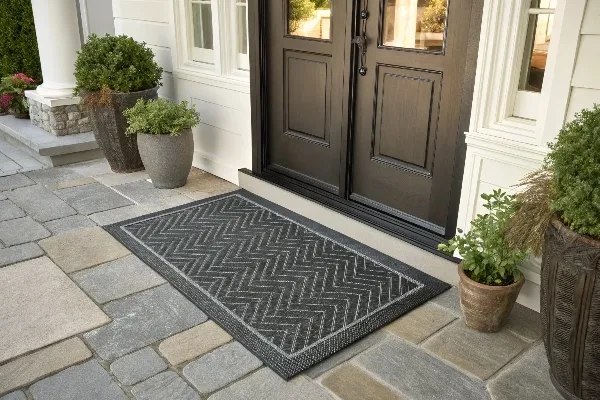
Essential Features: A Technical Evaluation
Evaluating a doormat should be like assessing any functional tool. Here are the key performance indicators to judge and the trade-offs to consider.
- Drainage and Water Management:
- What it is: The mat’s structural design for channeling water away from its surface.
- How to judge: Look for visible, deep channels, perforations, or a raised, bi-level texture that allows water to drain below foot level. A flat, non-porous surface may be water-resistant but can create puddles.
- Trade-off: Aggressive drainage channels are highly effective but can be more challenging to clean fine debris from compared to a simpler pattern.
- Backing and Slip Resistance:
- What it is: The material on the underside of the mat responsible for gripping the floor.
- How to judge: Look for solid, heavy-duty rubber (often SBR or nitrile rubber). A quality backing will feel substantial and non-brittle. Avoid lightweight foam or latex backings for exposed outdoor use, as they degrade and lose grip.
- Trade-off: Heavier rubber backings provide superior stability but increase the overall weight of the mat, making it harder to lift for cleaning.
- Material Durability and Resistance:
- What it is: The mat’s ability to withstand environmental stressors without degrading.
- How to judge: Check for UV-stabilized materials (like polypropylene or solution-dyed nylon) to prevent fading and cracking in sunlight. For colder climates, inquire about freeze-thaw resistance, as some types of vinyl and rubber can become brittle and crack. Low-VOC (Volatile Organic Compound) materials are also preferable to minimize off-gassing.
- Trade-off: Highly durable, commercial-grade materials may have a more functional, less decorative appearance than their residential counterparts.
Material Analysis: Making an Informed Choice
The material composition is the core of the mat’s performance. The choice depends entirely on the application and exposure level.
| 재료 | Performance Characteristics | Best Suited For | 고려 사항 |
| Rubber (Nitrile, SBR) | Excellent water resistance, high durability, and superior grip. Mold and mildew proof. | Fully exposed entryways, high-traffic areas, and all weather conditions. | Can absorb heat in direct sun. Quality varies, so look for heavy, pliable rubber. |
| Synthetic Fibers (Polypropylene, Nylon) | Very good at scraping debris, dries quickly, and is highly resistant to mold, rot, and UV fading. | All-purpose use, especially effective for trapping both dirt and moisture. | The pile can compress over time in extremely high-traffic commercial settings. |
| Coir (Coconut Fiber) | Excellent scraping ability for dry dirt and mud. Natural, rustic aesthetic. | Fully covered and dry entryways only. | Highly absorbent and will biodegrade, shed, and develop mildew if kept wet. |
| 비닐 | Good water resistance and easy to clean. Often used in looped or “spaghetti” style mats for drainage. | Moderate traffic in covered or semi-covered areas. | Can become stiff and crack in freezing temperatures. Less durable than rubber. |
Quick Selection Checklist
Before purchasing, use this checklist to ensure the mat fits your specific needs.
- ☐ Door Clearance: Measure the gap between the bottom of your door and the floor. Action: Choose a mat with a total thickness less than this measurement (e.g., if your gap is 1.5 cm, select a mat that is 1.2 cm or thinner).
- ☐ Drainage Structure: Is the mat for a location exposed to direct rain? Action: If yes, confirm the mat has built-in drainage channels, perforations, or a high-low construction. Flat mats are unsuitable for wet, uncovered areas.
- ☐ Backing Type: Turn the mat over. Action: Look for solid, heavy rubber. If the backing is lightweight, feels like foam, or has a visible mesh, it is likely less durable and slip-resistant.
- ☐ Cleaning Method: How will you clean it? Action: For easy maintenance, confirm the mat can be hosed down. Fabric-like surfaces may require more intensive cleaning.
- ☐ Primary Use Case: Is it for mud, sand, water, or general dust? Action: Match the surface texture to the need: an aggressive scrape for mud, a finer pile for dust and water, and open loops for sand.
Scenario-Based Selection Guide
Different entryways demand different specifications. Instead of focusing on brands, prioritize these features for your situation.
- For Heavy Rain and Muddy Conditions:
- Priority Specs: Look for a “bi-level” design where the surface is raised above the base. This allows the mat to scrape shoes effectively while retaining significant water and mud below foot level. An aggressive, cleated surface texture is critical. The overall weight should be substantial to prevent movement.
- For a Fully Uncovered Porch or Entryway:
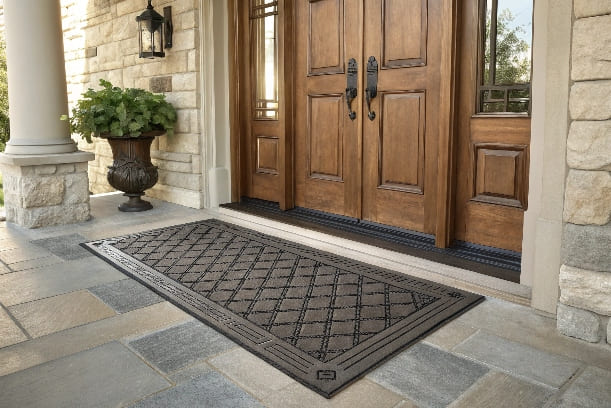
- Priority Specs: The material must be 100% non-absorbent and UV-stabilized. Solid rubber or high-grade polypropylene are ideal. Verify it has excellent drainage and is rated for freeze-thaw cycles if you live in a cold climate. For an example of a structure well-suited for drainage, see this type of heavy-duty, double-striped construction.
- For a Double Door Entrance:
- Priority Specs: Proportions are key. A standard mat will look undersized. Seek out oversized dimensions (e.g., 48″ x 30″ or larger) to properly cover the wide threshold. The weight should be significant to ensure it lays flat and stays in place across the large span.
- For a Commercial or High-Traffic Entry:
- Priority Specs: Durability is paramount. Look for commercial-grade nylon or polypropylene with a crush-resistant pile. The backing should be solid nitrile rubber for maximum grease and oil resistance. Ensure the edges are beveled and low-profile to comply with ADA guidelines and reduce tripping hazards. For a simple but effective example, consider the design of a basic outdoor cut pile mat built with commercial-grade materials.
Care and Maintenance: Protecting Your Investment
Proper care extends the functional life of your mat.
- Routine Cleaning: Regularly shake out or vacuum the mat to remove loose dirt and prevent it from becoming compacted.
- Deep Cleaning: For most waterproof mats, a simple hosing down is the most effective deep cleaning method. Use mild soap only if necessary.
- Drying: Always allow the mat to dry completely before placing it back down, preferably in an open, airy location.
자주 묻는 질문(FAQ)
- What is the functional difference between “waterproof” and “water-resistant”?
A waterproof mat is made of non-porous materials (like rubber) that do not absorb water. A water-resistant mat is typically made of synthetic fibers that resist saturation and dry quickly but can still hold some moisture temporarily. - How critical is the weight of an outdoor mat?
Weight is a key indicator of quality and stability. A heavier mat is less likely to shift underfoot, curl at the edges, or be moved by wind, making it a safer and more effective choice. - Can a waterproof outdoor door mat damage the surface underneath it?
If water becomes trapped 아래 a non-breathable mat for extended periods, it can potentially discolor wood decks or stone. It’s good practice to occasionally lift the mat during dry weather to allow the underlying surface to air out completely.
결론
올바른 것을 선택하다 waterproof outdoor door mat is a technical decision, not a decorative one. By moving past marketing claims and focusing on verifiable specifications—material composition, drainage design, backing type, and durability ratings—you can select a product that provides tangible benefits in safety, cleanliness, and long-term value. Assess your specific environment, prioritize the features that matter most for that location, and you will make an informed choice that effectively protects your home.