
 English
  German
  French
  Spanish
  Turkish
  Italian
  Russian
  Arabic
  Persian (Afghanistan)
  Hebrew
  Bengali
  Persian
  Scottish Gaelic
  Panjabi
  Croatian
  Slovenian
  Greek
Greek  Afrikaans
  Korean
  Japanese
  Portuguese


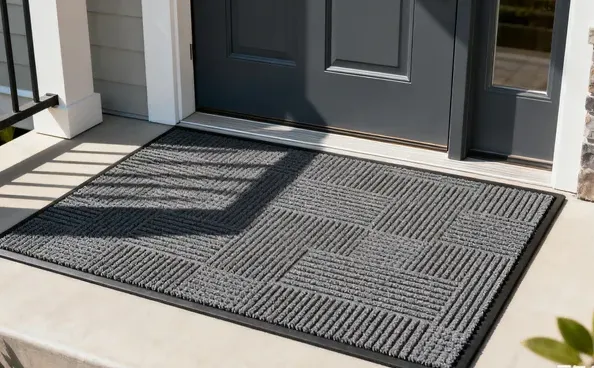
Dirty shoes can wreck floors fast. A mat that’s too small lets grit walk inside. A mat that’s too thick can catch the door and become a trip hazard. I run a custom mats factory, and I’ll help you choose door mat dimensions that work.
To choose door mat dimensions, measure the clear door opening, leave room for the swing, and pick a mat wide enough for most steps and long enough for 2–4 wipes. For many homes, 18 inches by 30 inches fits a single door; wider entryways and front doors often benefit from 24×36 or 36×48 options, depending on space and traffic.
Executive Summary
- Shoppers don’t buy “a mat.” They buy the right doormat that fits their front doors and looks proportional in the entryway.
- Your best conversion play is to stock a core range (18×30, 24×36, 36×48) plus a “halo” of runners and custom formats for high-value orders.
- Treat door clearance as a spec item: thickness + edge profile should match the door swing to avoid customer returns.
- Residential egress guidance commonly calls for 32 inches minimum clear opening at the egress door—use this as a reality check for what “standard” often means.
- Landing space matters: many code guides reference 36-inch landings at exterior doors—helpful for deciding when a larger mat will physically fit.
- If you’re buying private label, lock down measurable QC points (curl, backing slip resistance, water handling, carton drop tests) before you scale.
What is the standard door mat size, and why does it vary?
In retail, “standard” is really shorthand for what fits most common doors, ships efficiently, and looks good in a photo. That’s why you’ll see a repeating pattern across doormats: 18×30 and 24×36 for typical residential use, plus 36×48 for bigger entryway moments.
Here is the practical reality for sellers: shoppers often ask for a standard size and a “front door mat” they can buy without measuring. Your job is to make that purchase feel safe. So we don’t just sell a mat—we sell fit confidence through clear dimension guidance, thickness notes, and a simple “measure before you buy” checklist.
From my factory side, I also see “standard” shaped by cartons and pallets. If a mat forces oversized packaging, it costs more to ship, gets damaged more easily, and drives returns. That’s why a buying guide must balance real-life fit and logistics—not just aesthetics.
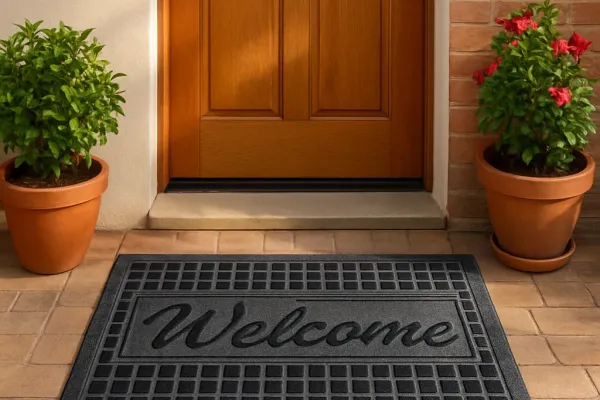
How do I measure a door and choose the right mat dimensions?
You only need three measurements to choose a mat with fewer returns: (1) the width of the door opening, (2) the available depth outside the threshold, and (3) how far the door swings inward (your door clearance check).
Quick performance note (based on our production tests)
A mat is most effective when it trap dirt in the first few steps and keeps moisture off the floor. For higher foot traffic, we increase surface texture and use heavier backing so the mat stays flat. For low traffic, a simpler texture is fine and lowers cost.
Mini chart: wipe length vs “steps on the mat” (practical field guide)
18″ | ██ (about 1–2 steps)
24″ | ███ (about 2 steps)
36″ | █████ (about 3–4 steps)
48″ | ███████ (about 4–5 steps)
Quick rule of thumb
- Aim for a mat that covers at least 80% of the door opening width (visually looks “right” and catches more debris from shoes).
- If you can fit it, longer is better than slightly wider because it creates more “wipe steps.”
Measure checklist (copy/paste for your product page)
- Measure door opening width (inside trim).
- Measure available depth outside the door (porch/landing).
- Check swing and under-door clearance (especially for thick pile mats).
- Note any nearby obstacles (steps, railings, planters, furniture).
If you’re spec’ing for a larger entry, code guides often reference 36 inches of landing depth at exterior doors, which is a helpful physical constraint for many homes.
What doormat dimensions work best for a single door?
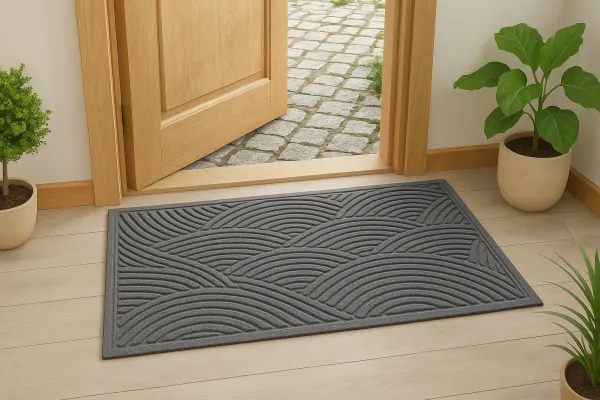
For a single door, most buyers want a doormat that looks proportional and catches dirt and debris from shoes without blocking the swing. In our customer feedback loops, the most reliable starter dimensions are:
- 18 inches by 30 inches (the common “starter” format)
- 24×36 (the “feels more premium” upgrade)
- 36×48 (when the entry is larger or traffic is high)
Here’s how I explain it to wholesale buyers: if your product page only shows one mat, many shoppers guess wrong. If you show two or three options with simple “best for” guidance, you reduce returns and increase average order value.
A quick cleaning note: many cleaning experts recommend shaking out or beating mats weekly and doing a deeper clean every month or two, depending on soil load and weather.
What mat dimensions fit a double door without looking undersized?
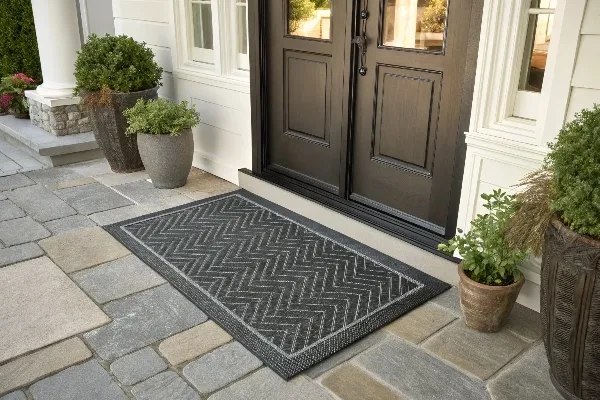
A double-door setup creates a visual “stage.” A small mat looks lost, even if it technically catches some dirt. For a double-door setup, I recommend starting with 36×48 and moving up to 48×72 runners when the space allows.
Here’s the proportional rule that works well for paired doors: try to cover most of the combined opening width, and make the depth long enough that someone can take multiple wipes before stepping onto interior flooring. This is where a larger mat earns its keep—especially during rainy seasons and high-traffic holidays.
If you sell to design-forward customers, show photos with furniture scale. The door looks “right” when the mat spans the main walking line and doesn’t feel like a small island.
How do I choose a mat for an entryway with multiple paths?
Not every entryway is a straight walk. Some entrances have a turn into a hallway, some open into a kitchen, and some lead into a mudroom. In those cases, a single rectangle might not be the best floor mat strategy.
I usually recommend one of these approaches:
- Runner + smaller companion: a longer runner in the main lane, plus a smaller mat near a side door.
- Modular approach: two mats placed like stepping stones, so the mat stays in place where people actually walk.
- Wide-format: one larger mat that covers both lanes when the entry is open and unobstructed.
If you’re supplying hospitality or retail chains, mapping the walking lanes matters more than chasing “standard” formats. The goal is simple: keep debris from shoes off the interior floor, without creating awkward edges that customers trip over.
How thick should a door mat be for outdoor use and door clearance?
Thickness feels like quality—until the customer’s door hits it. For outdoor use, you want enough structure to scrape and hold dirt and debris, but not so much height that the door drags.
A practical guideline: if a door already sits low, pick a slimmer profile mat or a tapered edge. If the threshold is higher and the landing is flat, you can use a thicker pile or textured surface.
Also keep ADA-friendly thinking in mind: changes in level are treated carefully, and higher rises often require beveling to reduce tripping risk. The Access Board’s guidance on “Changes in Level” is a helpful reference mindset for edge transitions.
Safety and movement: how to size for anti-slip performance
If a mat slides, it fails—no matter how nice it looks. In workplaces, OSHA requires walking-working surfaces to be maintained in a safe condition. For consumer products, the logic is similar: the mat must stay flat, stay put, and avoid curled edges.
Bigger mats can reduce water spread, but only if they stay put. NIOSH highlights that slips, trips, and falls account for about 18% of lost-time injuries (2020).
“If a mat doesn’t stay in place, it isn’t doing its job—no matter how perfect the dimensions look.” — our QC note from routine backing tests
One more procurement tip: many spec teams like measurable safety targets. On hard flooring, standards like ANSI A326.3 focus on dynamic coefficient of friction testing for tile surfaces. Mats are different products, but the mindset is useful: define what you will test (backing shear, edge curl, water absorption) and keep that test plan consistent across suppliers.
Spec checklist for buyers
- Backing grip (rubber backing or equivalent) and flatness after rolling.
- Tapered edge option for high traffic zones.
- Water handling (absorb vs scrape) matched to climate.
- Washability requirements for indoor mats.
Which type of mat material works best for dirt and debris control?
The type of mat should match the environment. Here’s how we explain it in B2B terms:
- Coir (coconut fiber): great scraping, classic look, strong “welcome mat” feel. It performs best in covered outdoor areas and dry climates.
- Rubber mats: strong backing, great for wet conditions, easy to hose off, good for outdoor mat placements that see rain.
- Machine washable synthetics: popular for e-commerce because they reduce return anxiety and support repeat purchase.
If your customers complain about “mess,” they usually mean one of two things: either the mat doesn’t scrape enough, or the mat gets saturated and spreads moisture. The fix isn’t always a bigger mat—it’s the right surface design plus the right placement.
B2B buyer checklist: stock planning, private label, and custom size programs
If you sell to importers, retail chains, or brand owners, you’re not just choosing a mat—you’re choosing a SKU system.
Core B2B decision table (what I recommend stocking first)
| Door type / space | Recommended core formats | Why it sells | Watch-outs |
|---|---|---|---|
| single door | 18×30, 24×36 | easy fit, low return risk | thickness vs door swing |
| double doors / wide opening | 36×48, 48×72 runner | looks proportional, catches more debris from shoes | higher freight cost |
| tight porch / small landing | slim-profile 18×30 or 24×36 | fits the space | edge curl control |
| high-traffic entryway | 36×48+ or runner | better wipe zone | backing grip and cleaning plan |
Standardize these items
- Backing type (anti-slip vs heavy-duty outdoor).
- Surface type (scrape, absorb, or hybrid).
- Packaging (barcode, insert card, care instructions).
- QC tests (curl after unrolling, wet slip, stitching strength).
Assumptions and trade-offs (so you can spec with confidence)
When I recommend dimensions, I’m assuming three common conditions: the door swings inward, the threshold area is mostly flat, and people take the “main lane” straight through the doorway. If your project differs, adjust the plan.
When these recommendations do not apply
- Recessed mat wells: if the mat sits in a frame, thickness rules change and you can use deeper textures.
- Out-swing exterior doors: you may have more room inside, but wind can lift corners outside, so edge weight matters.
- Very tight porch depth: if you have only a shallow landing, a slimmer profile matters more than extra length.
Key trade-offs buyers should plan for
- Wider coverage improves wipe performance, but cartons get bigger and freight costs rise.
- Thicker fibers feel premium, but they can interfere with door swing and increase tripping risk if edges curl.
- Natural fibers look great in a welcome mat display, but synthetics often last longer in wet climates.
Channel assortment matrix (helps with purchasing decisions)
| Channel | Core dimensions to stock | Best-fit materials | Packaging notes |
|---|---|---|---|
| Online marketplaces | 18×30, 24×36, 36×48 | washable synthetics, coconut fiber blends | clear photos, simple size labels, easy returns |
| Supermarkets / DIY chains | 18×30, 24×36 | scraping textures, durable backing | barcode-ready cartons, strong shelf impact |
| Hospitality suppliers | runners, modular tiles, 36×48+ | heavy backing, fast-dry surfaces | replacement parts, bulk packing, consistent dye lots |
| Promotional programs | custom logo formats | printable surfaces, stable backing | proof process, color control, lead-time clarity |
“Core + Halo” size plan (simple and effective)
- Core: 18×30, 24×36, 36×48 (highest turnover)
- Halo: runners + custom mats for premium entryway projects
If you’re a private label brand, this is where we add value: we help define carton specs, labeling, care icons, and the QC checklist so your customers feel like the product is “easy to buy.”
FAQs: door mat size and buying decisions
What is the perfect size door mat size for front doors?
For many front doors, 24×36 is a safe, balanced choice. If the doorway is narrow or space is tight, 18×30 works. If the entry is wide and open, 36×48 looks more proportional and catches more dirt.
How do I avoid choosing the wrong doormat size online?
Measure the opening width, check door swing clearance, and compare your space to the product photos. If the seller provides “best for” guidance (single door vs wide opening), follow that instead of guessing.
Does a larger mat always work better?
Not always. A larger mat can improve wipe performance, but it may not fit the landing, may cost more to ship, and can be a tripping risk if it curls or slides. Fit and stability come first.
What door mat size should I use for a two-door opening?
Start at 36×48 as a baseline, then move to runner formats if the space allows. The key is visual proportion plus enough length for multiple wipes.
Are coir mats good for outdoor use?
Yes for covered outdoor areas. They scrape well, but they can shed fibers and may not be ideal in constantly wet climates. Pair them with a strong backing and clear care instructions.
How do I prevent a mat from sliding?
Use a grippy backing, make sure the floor is clean and dry under the mat, and choose a format that sits flat. If you’re buying for retail or hospitality, make backing grip part of your QC spec.
Sources & standards (helpful references)
- U.S. Access Board – ADA guide on “Changes in Level” (¼ inch / ½ inch beveled)
- OSHA 1910.22 – Walking-Working Surfaces
- San Bernardino County plan review comments (CRC/IRC excerpts on egress door clear opening and landings)
- Indiana DHS – Residential Code R311 (Floors and landings at exterior doors)
- NIOSH Fast Facts – Slips, Trips, and Falls
- Industry explainer on ANSI A326.3 (DCOF) for hard flooring friction testing
Key takeaways (remember these)
- Measure door opening width, landing depth, and swing clearance before you choose a mat.
- For single door setups, 18×30 and 24×36 are the safest sellers; for wide openings, start at 36×48.
- Bigger isn’t better if the mat slides, curls, or blocks the door.
- Match material to climate: scraping textures for dry dust, fast-dry surfaces for rain, washable options for e-commerce.
- For B2B, win with a SKU system: core formats + halo runners + clear QC specs.
- If you want fewer returns, sell “fit confidence,” not just a product.
Next step (soft + practical): If you tell me your target channel (Amazon, retail chain, hospitality, or private label) and your top 3 SKUs, I can help you build a tighter dimension chart, packaging spec, and QC checklist—so your doormats convert better and come back less.