
 English
  German
  French
  Spanish
  Turkish
  Italian
  Russian
  Arabic
  Persian (Afghanistan)
  Hebrew
  Bengali
  Persian
  Scottish Gaelic
  Panjabi
  Croatian
  Slovenian
  Greek
Greek  Afrikaans
  Korean
  Japanese
  Portuguese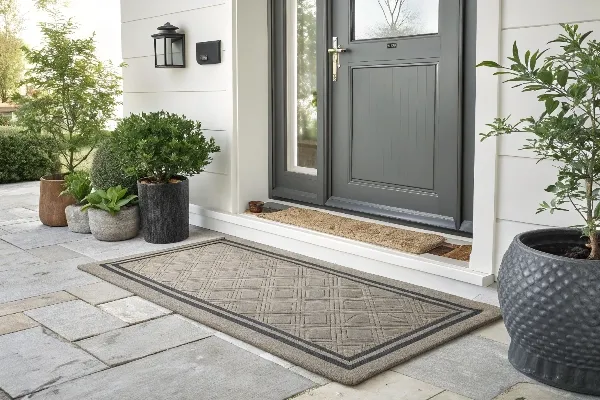

Your front door gets hit with mud, rain, pet paws, and heavy foot traffic—then your home pays the price. A weak door mat curls, slides, and turns into a dirt trap that’s hard to clean. I’ll show you a simple way to pick a durable, good-looking, machine washable doormat or entry rug that solves the mess fast.
The best machine washable doormats are low-pile, quick-dry rugs or mats with a stable backing that won’t slip, sized to your front door and built to trap dirt and moisture without bunching. For outdoor use, choose weather-ready materials and drainage; for indoor entryways, focus on washability, non-slip safety, and a design that makes a strong first impression.
Article outline
- How we test doormats and rugs (a simple, repeatable method)
- Coir vs synthetic vs rubber: choosing the right material
- Machine washable rug vs classic doormat for indoors
- Waterproof needs for outdoor weather conditions
- The features that matter: non-slip backing, rubber backing, profile
- Getting the right size, shape, and border for your front door
- Design and pattern choices that still trap dirt
- “Top picks” by scenario: pets, winter, high-traffic, minimalist
- What works best on wooden porches and smooth floors
- How B2B buyers build a trusted private-label doormat line
How I test doormats and rugs: a simple “door mat test” you can copy
When buyers ask me for the best doormats, I don’t start with a logo or a trend. I start with a test plan. In our custom mats manufacturing plant, we review samples the same way a retailer or distributor should: does it keep floors cleaner, stay in place, and still look good after real use?
Here’s the quick method I recommend for a front door “at-home lab” (or a small showroom trial). First, do a dirt and debris pass: step on the doormat with dusty shoes 10–15 times, then lift the mat and check what fell through. Next, do a moisture pass: drip water on the surface, press with a shoe, and see whether it spreads, beads, or soaks. Finish with a stability check: push the edge with your toe—if it starts sliding around, the backing and weight aren’t right.
A simple scoring chart (use it to compare any option):
Dirt scraping |█████████░ 9/10
Moisture hold |███████░░░ 7/10
Dry time |██████░░░░ 6/10
Non-slip |████████░░ 8/10
Easy to clean |█████████░ 9/10
This isn’t fancy science. It’s a practical test that matches what your customers feel every day: cleaner floor, safer steps, fewer stains, and a better first impression.
Coir, recycled fiber, or rubber: which doormat material works best?
Most doormats fail because the material doesn’t match the job. If you want strong scraping power, coir (coconut fiber) is a classic. Its rough surface helps with trapping dirt, especially gritty soil and sand. Many coir guides explain that the bristly texture helps remove dirt and moisture from footwear.
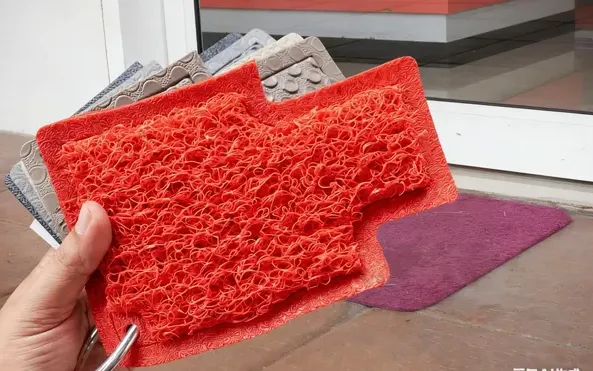
But coir isn’t always the best choice for every buyer. It can shed, and it may not be ideal for households that want a soft, washable entry rug. For that, synthetic fibers like polyester (often used in machine-washable rugs) can be a better option because they keep color and shape well in a wash cycle. Consumer care guides commonly recommend cold water and gentle cycles to protect rug fibers.
Rubber (or rubber-style) mats are strong for outdoor exposure and rain. They often resist soaking and can be hosed off, but deep patterns can hold mud if you don’t rinse well. So the trade-off is simple: coir scrapes hard, washable rugs clean easily, rubber handles wet weather.
Quick comparison table (buyer-friendly)
| Material type | Best for | Cleaning | Durability | Notes |
| Coir doormats | Scraping grit at the door | Shake/vacuum, spot clean | Good | Great “classic” look; can shed |
| Machine washable rug (polyester) | Indoors, pets, kids | Washer (if labeled washable) | Good–Very good | Choose low pile + stable backing |
| Molded rubber mat | Rainy porches, heavy use | Hose + scrub | Very good | Look for drainage and weight |
| Wooden slat mat (teak-style) | Sand/surf areas | Hose + air dry | Good | Tall profile; check door clearance |
Machine washable rug vs doormats for indoors: what should you choose?
For indoors, many shoppers now prefer a washable entry rug over a stiff door mat. Why? Because indoor mess is usually “fine dirt + moisture,” and people want an easy reset: wash, dry, place back down. That’s why machine washable rugs have become a strong category for e-commerce sellers and retail chains.
But not every rug belongs in a washer. Home-care experts often stress: only wash rugs that are clearly labeled machine washable, and avoid damaging your machine by overloading it. In our sampling, the best indoor performers share a combination of traits: low pile (so it doesn’t hold too much water), colorfast printing, and a backing that stays flat after washing.
If you’re building a private-label line, I always recommend you offer two indoor options:
- A “daily use” entryway rug (neutral, minimalist, easy to match)
- A “style” option with a stronger pattern or seasonal design for promotions
That approach helps online sellers cover both search intent: practical cleaning and home décor.
Outdoor and waterproof needs: what matters in rain, snow, and weather conditions?
Outdoor mats do two jobs: they take abuse from weather conditions, and they protect the indoor floor from what shoes bring inside. Industry sources often cite that a large share of soil and grime enters through the front door. For commercial spaces, entrance matting is widely promoted as a first line of defense against tracked-in dirt.
For homes, the logic is the same—just smaller scale. If your porch gets rain, pick an outdoor doormat that drains or dries fast. “Waterproof” can mean different things, so I tell buyers to ask one simple question: does the mat handle water by shedding it (drainage), or by holding it (absorbent fibers)? For uncovered entrances, drainage wins. For covered entrances, absorbent can work—if it dries fast.
Also note: winter and snow change everything. Grit and salt can speed up wear, so a durable rubber-style mat or a tough coir blend often holds up better than a plush rug outside. If you need a true waterproof option, focus on rubber or hybrid constructions designed for outdoor use.
Non-slip backing, rubber backing, and low profile: the safety features buyers trust
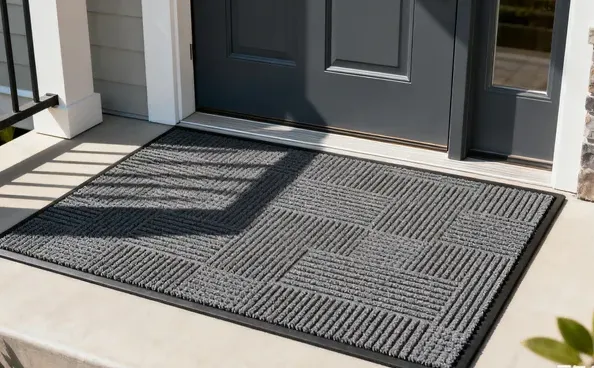
A mat that slides is worse than no mat. I say that as a manufacturer and as a writer who reads too many customer reviews. The two biggest stability helpers are non-slip backing and weight. A good rubber backing (or similar) improves grip and keeps corners from lifting.
If you sell to hotels, hospitality suppliers, or hardware store chains, safety is not optional. The UK Health and Safety Executive notes that most slips (90%) occur when floors are wet or contaminated in food settings—wet surfaces are a major risk. While a home entryway isn’t a commercial kitchen, the principle still matters: wet soles + smooth floor = a slip risk.
Here’s a short checklist we use in product development:
- Profile: low enough that doors swing freely, high enough to trap dirt
- Backing grip: reduces movement on tile, wood, vinyl
- Border and edge: avoid curled edges that catch shoes
- Surface texture: scrapes without being painful for bare feet (especially for indoor use)
Make sure that your doormat has the right backing for the surface it sits on. If the floor is polished or smooth, prioritize grip even more.
Size, shape, and border: fitting the front door and managing foot traffic
A common buying mistake is choosing a mat that looks cute but is too small. If the size is off, the mat can’t do its job—shoes step around it, not on it. For most homes, a doormat should be at least as wide as the door, and ideally wider if you have two people entering at once.
Shape also matters. A half-moon or angled shape can work well when door clearance is tight. A rectangle is the most versatile and easiest to merchandise. For high-traffic entrances, consider a longer runner-style rug inside plus a tougher outdoor mat outside. That two-step system is simple, and it works.
Practical sizing tips (retail-friendly):
- Small: apartments, side doors, smaller entry
- Medium: standard front doors
- Large: double doors, high foot traffic, busy family homes
A defined border can help the mat look “finished,” and it can reduce fraying on woven surfaces—especially important for e-commerce returns and reviews.
Design and pattern: how to make a first impression without losing function
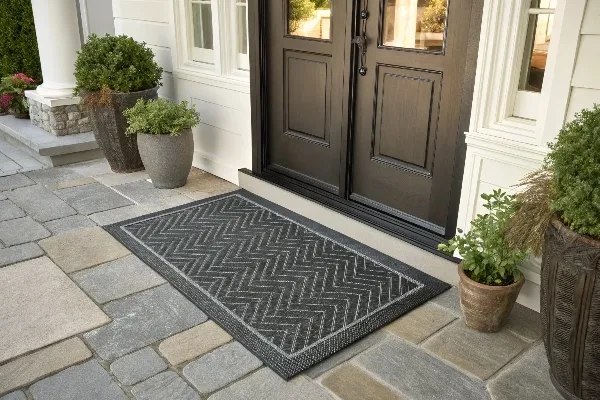
A doormat is the handshake of the home. It sets a first impression for every guest, visitor, and delivery person. But design should not kill performance. The best-looking mats still need to trap dirt and survive clean cycles.
From what we see in custom projects, these design directions sell consistently:
- Neutral minimalist looks for modern interiors
- Classic coir looks for traditional homes
- Bold pattern and seasonal prints for promotional campaigns (spring, Halloween, holiday)
The trick is choosing a printing or weaving method that holds up. If a design fades after a few washes, reviews drop fast. That’s why we always run a colorfastness spot test on sample yardage before mass production, especially for private label orders.
If you’re a brand owner, align design with use-case: a busy entryway wants a forgiving pattern that hides stain marks; a boutique interior brand may prefer a calmer tone with a premium texture.
Top picks by scenario: what I recommend for real homes (and why)
“Top picks” depend on the mess you’re fighting. Independent testers have evaluated many doormats for durability, dirt trapping, and ease of cleaning, and they often highlight categories like thick coir, indoor-outdoor waterhog-style mats, washable layered mats, rubber rain mats, and even wooden slat mats for sand. I use those categories as reference points when we build OEM collections.
Here are my practical top picks by scenario (category-based, not brand-based):
- High-traffic family home: low-profile indoor rug + outdoor scraper mat
- Pet home: machine washable entry rug with non-slip backing; choose fibers that release hair easily in a wash
- Rainy climate: heavier rubber-style outdoor mat with drainage + a quick-dry indoor rug
- Mud season: coir (or coir blend) outside for scraping + washable runner inside
- Minimalist look: neutral, low pile rug with a subtle texture—stylish and easy to clean
- Seasonal promos: printed rugs with colorfast dyes + stable backing, sized for standard doors
One note: don’t promise “zero mess.” Instead, promise less mess and easier cleaning. That message builds trust and reduces returns.
Wooden porches and smooth floors: what works best without scratching or slipping?
A wooden porch looks great, but it can be tricky. Wood expands and contracts with moisture, and some finishes get slick when wet. So you want two things: a doormat that won’t trap water against the wood, and a backing that won’t stain or slide.
For covered wooden porches, coir or a breathable mat can work—just keep it dry underneath. For uncovered porches, rubber-style mats that drain often perform better. If the porch is near sand (beach homes), a wooden slat mat (often teak-style) can be a smart option because sand falls through gaps and can be rinsed away.
Indoors on smooth tile or laminate, grip is king. A good non-slip backing prevents sliding, and a thin profile reduces trip risk. If you see corners lifting after washing, that’s a sign the backing or construction needs improvement—flag it in your supplier feedback.
Building a doormat line that buyers trust: a B2B guide for importers and private label brands
Now let’s talk like buyers.
If you’re an importer, retailer, or e-commerce seller, you don’t just need “a mat.” You need a repeatable, profitable line: consistent quality, stable supply, attractive design, and clear packaging. In our custom mats manufacturing plant in China, most successful B2B programs share three habits:
- They standardize the spec (size, backing type, pile height, weight) so reorders match.
- They test early (small batch before scaling) to prevent review problems.
- They build a story (eco-friendly materials, washability, durability) that fits their brand.
What to ask your factory (simple, high-impact questions)
- What material options do you offer (coir, recycled PET fiber, rubber blends)?
- What backing types do you support (rubber backing, non-slip backing, TPR-style)?
- What is your wash test method and shrinkage tolerance for machine washable rugs?
- Can you support custom design and packaging (barcodes, inserts, cartons)?
- What’s the MOQ per pattern, and what’s the lead time per option?
A small case study (what we see work)
A mid-size online seller came to us with high return rates. The issue wasn’t the design—it was the wrong profile and backing for smooth floors. We adjusted the backing spec, tightened the edge binding, and standardized the wash test. Returns dropped, and reviews improved because the rug stayed flat and was easy to clean.
That’s the real B2B advantage of working directly with a manufacturer: you’re not stuck with a one-size-fits-all catalog. You can build what your customers actually need.
FAQs about doormats, rugs, and machine washable care
How often should I clean my doormat?
For most homes, a monthly deep clean is a smart baseline, with more frequent shaking or vacuuming during high-traffic seasons. Home-care guidance often suggests regular cleaning so the mat keeps trapping dirt instead of spreading it.
Are coir doormats good for rainy weather?
Coir can work well for scraping dirt, but it’s best in covered outdoor areas so it can dry. Coir fibers are commonly described as good at scraping dirt and handling moisture, but постоян wet exposure can shorten life.
What makes a rug truly machine washable?
Look for a clear label stating it’s machine washable, a flexible construction, and dyes that won’t bleed. Experts warn that washing non-washable rugs can damage both the rug and your washer, so always check the care label and do a spot test.
What wash settings are safest for machine washable rugs?
Most guides recommend cold water and a gentle cycle, plus mild detergent and low heat drying (or air drying) to protect fibers and shape.
Do doormats really reduce what gets tracked into the home?
Yes—because most soil enters through the front door on shoes. Studies and industry guidance on entrance matting emphasize that a large portion of soil entering buildings is “walked in,” and matting helps reduce it.
Why do I care about shoes and indoor dirt beyond looks?
Because it’s not just dirt—it can be microbes too. Research reviews discuss how shoe soles can carry contamination, and one review notes findings that shoe soles in community settings can be contaminated with toxigenic C. difficile.
Final checklist: the most important things to remember
- Pick the doormat or entry rug based on use: indoors vs outdoor needs are different.
- Run a quick test: dirt scraping, moisture handling, and stability (no sliding).
- Match material to the mess: coir for scraping, washable rugs for easy cleaning, rubber for wet weather.
- Prioritize safety: non-slip backing and a low, stable profile matter on smooth floors.
- Choose the right size so shoes land on the mat, not around it.
- Let design support function: a smart pattern can hide stains and still look stylish.
- For B2B: standardize specs, test early, and build a consistent private-label line customers trust.
- If you want fewer returns and better reviews, focus on durability, wash performance, and backing quality—every time.
If you tell me your target market (EU/UK/US), sales channel (retail, Amazon, hospitality), and the main scenario (pet, rain, high-traffic), I can recommend a tight product lineup and the exact spec checklist you should send to your factory.